Author name: Cheryl Bregman

Cheryl Bregman is an occupational therapist with 25+ years helping children overcome handwriting challenges and the founder of Handwriting Heroes. She holds a Master's in Technology in Special Education from Johns Hopkins University.

Choosing the Best Handwriting Program for Kids: An Administrator’s Guide

Executive Summary Choosing the best handwriting program for kids is not simply a question of which program is most familiar, most widely used, or easiest to purchase. It is an instructional decision with implications for literacy, writing fluency, teacher workload, intervention needs, and student confidence. A strong handwriting program should do more than help children […]

Choosing the Best Handwriting Program for Kids: An Administrator’s Guide Read More »
Handwriting Requires Explicit Teaching

In many early elementary classrooms, reading instruction is carefully structured. Students work through sound–symbol routines, practice blending, and receive frequent feedback as they build decoding skills.   Handwriting, however, is often approached with far less structure. Students may be given tracing pages, handwriting worksheets, or open-ended writing time with the expectation that correct letter formation

Handwriting Requires Explicit Teaching Read More »

The Tracing Trap: Why Following the Dotted Line Misses the Mark

Tracing gives children a route to follow, but it does not teach them how to navigate writing on their own. Tracing is often introduced as a structured, low-risk starting point for handwriting. Children are given dotted letters, clear boundaries, and a task that appears manageable. The page fills neatly, the letters resemble the model, and

The Tracing Trap: Why Following the Dotted Line Misses the Mark Read More »

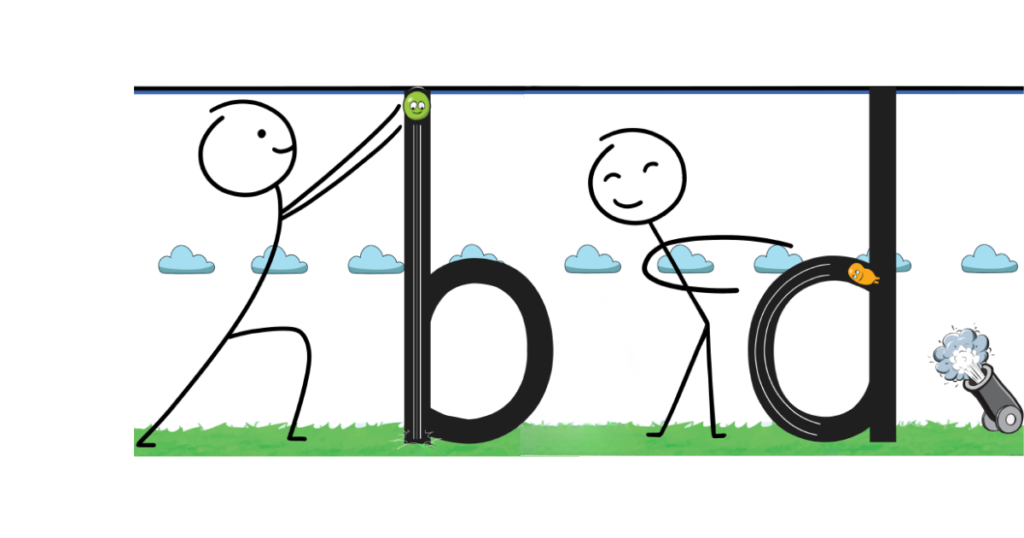
Letter Reversals Explained: A Guide to Fixing b and d

  Letter reversals, particularly confusion between b and d, are one of the most common challenges that emerge as children learn to read and write. Parents and educators often notice reversals during early writing tasks and wonder whether the child is struggling, guessing, or falling behind. In reality, letter reversals are a predictable part of

Letter Reversals Explained: A Guide to Fixing b and d Read More »

How Handwriting Supports Reading Development

Handwriting is often viewed as a motor skill, while reading is seen as a language-based skill. In reality, the two are deeply connected. The way children learn to form letters directly influences how efficiently their brains learn to recognize, process, and understand written language. Research in neuroscience and literacy development shows that handwriting instruction plays

How Handwriting Supports Reading Development Read More »

Letter Formation

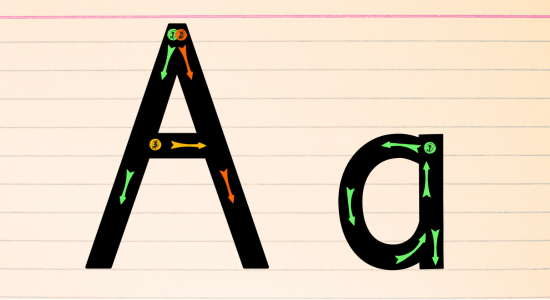
Letter Formation: The Secret to Better Writing and Reading

Watch a young child labor over the letter “b”, tongue pressed to the corner of her mouth, pencil gripped so hard her knuckles whiten, and you’re watching something much bigger than handwriting. You’re watching cognition in action. Every stroke she makes is training her brain: strengthening letter-recognition networks, building motor memory, forging the connections between

Letter Formation: The Secret to Better Writing and Reading Read More »

How can I help you?